Steve Snelgrove delights you with the most recent and classic world music.
Great music from around the world, the new, the classic and the determinedly esoteric!
Episode not found. The most recent episode will be shown instead.
From Malagasy Blues Song
First aired on Radio Mundial on 9 July 2013 at 8:00 pm
From CD Sleeve notes
If Lala Njava’s music was a colour, it would be indigo – a dark, pensive hue that rings with a deep, almost bluesy, edge. Listening to Malagasy Blues Song, we hear bending guitar lines, Lala’s silvery wandering voice and rippling percussion winding together in harmony. Like the flora and fauna of her Malagasy homeland, Lala’s music is distinctive and wholly unique. Unlike many musicians, Lala didn’t learn her style from chewed-up cassettes, vintage vinyl or from shiny silver CDs. She was inspired to sing by a woman called Mama Sana, the resident shaman in the village where she grew up. Lala describes visiting Mama Sana’s house and hearing her sing her emotional music ‘Malagasy style’, as if she were yelling or crying out in anguish. Reflecting this influence, for Lala singing isn’t purely a learned skill, but a natural form of expression – a realization of pain expressed out loud, or something as uninhibited as a scream or gasp. This organic approach can be heard in the groove and gutsy groan of her textured vocal performances on tracks such as ‘Blues Song’ and ‘Kabary Seza’. Alongside these early musical experiences with Mama Sana, the young Lala travelled across Madagascar performing with her family band, Njava. In conversation, Lala explains the organic and free-flowing way in which their familial music-making occurred. Upon moving to Europe during the 1990s, the band became professionally established and smoothly scaled the ladder of success, recording two albums for EMI, embarking on a world tour and laying down some vocals for renowned ‘ethnic-electronica’ group Deep Forest. ‘Sweet Lullaby’ is a re-recording of a track that Lala performed live with Deep Forest many times during this era of her career. Lala’s version is very different from the 1990s recorded pop original, and is deliciously reworked with her languorous bluesy swing. Stripped back to an acoustic setting, the lilting melody sparkles in its simplicity. The guitar that undulates underneath Lala’s striking vocal throughout the album is played in a style reminiscent of the various stringed percussion instruments that dominate traditional Malagasy music. The rippling guitar strings roll out like a lush valiha, a tube zither considered the national instrument of Madagascar. The melodious mix is then punctuated with thick bass hits and shape-shifting drums. The opening track on the album, ‘Soa Gnanay’ is a rich nostalgic tune, recalling the beauty of Lala’s homeland and inviting people to visit it regardless of the bad portrayal it is sometimes given in the international media. The looping riff that opens the album sounds bare, almost desolate, but soon Lala’s warm, enveloping voice swoops in to add a bright positive edge. Lala’s lyrics express the deep sense of responsibility she feels towards her Malagasy homeland. Many of the songs heard here declare her intent to, and experiences upon, returning to Madagascar in the hope of solving some of the social issues that pervade village life there. ‘Dinako’ means ‘promise’ in English, and is a soulful track that explores Lala’s desire to give something back to the community from which she came. ‘Pardon à l’Afrika’ is a tight funky number complete with bass stabs, close harmony backing vocals and perfectly timed guitar interjections. Lala’s voice here is straight-ahead and unornamented, conveying the direct message of her lyrics. The song is a staunch protest song, calling for political leaders to act upon some of the endemic political and social problems that are, in Lala’s eyes, shaking the very foundations of the African continent. Alongside curating her musical career, Lala and her sisters have set up their own non-governmental organization (NGO), Dames d’Amour, which aims to improve the living conditions of women and children in Madagascar. Their projects include funding the rebuilding and renovation of villages, working on providing free-trade projects with the United Nations and using theatre to explain the importance of contraception in avoiding illnesses or unwanted marriages. Many of Lala’s songs on Malagasy Blues Song connect to her passion for women’s rights. ‘Hasosora’ highlights the problem of illegal polygamy in Madagascar and is a lament for Lala’s sister, Pascale, who was married to a man with several wives. As the song unfolds, Lala informs us of Pascale’s descent into depression and ensuing tragic death from heartbreak and anguish over the situation. ‘Mosera’ is a loaded protest song against the rising tide of child sex tourism facing Madagascar. Stepping out bravely in the face of the establishment, Lala hopes those responsible for facilitating such horrendous crimes will hear the song, even though it may endanger her safety. Malagasy Blues Song is an album of deep and sonorous songs penned with purposeful lyrics. Melt into Lala’s expressive sound-world as she threads together the rich tapestry of the sounds, experiences and desires that have stitched her colourful life so far. For further information, please visit www.worldmusic.net/lalanjava

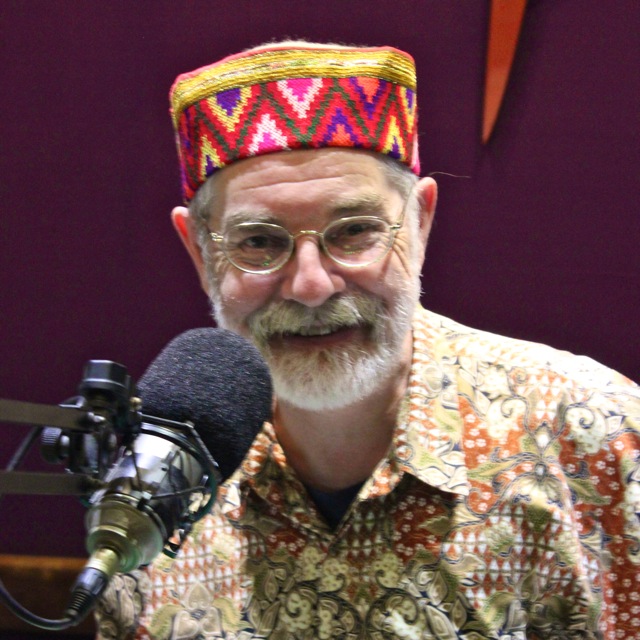 Radio Mundial with Steve Snelgrove